La Chaise En Chemin: The Story La Chaise En Chemin: L'Histoire
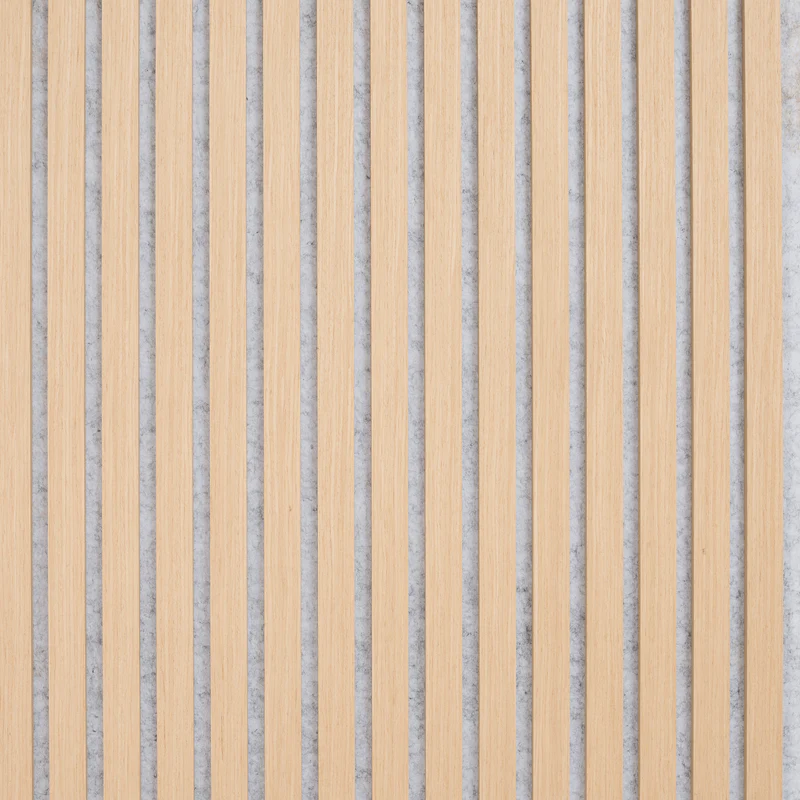
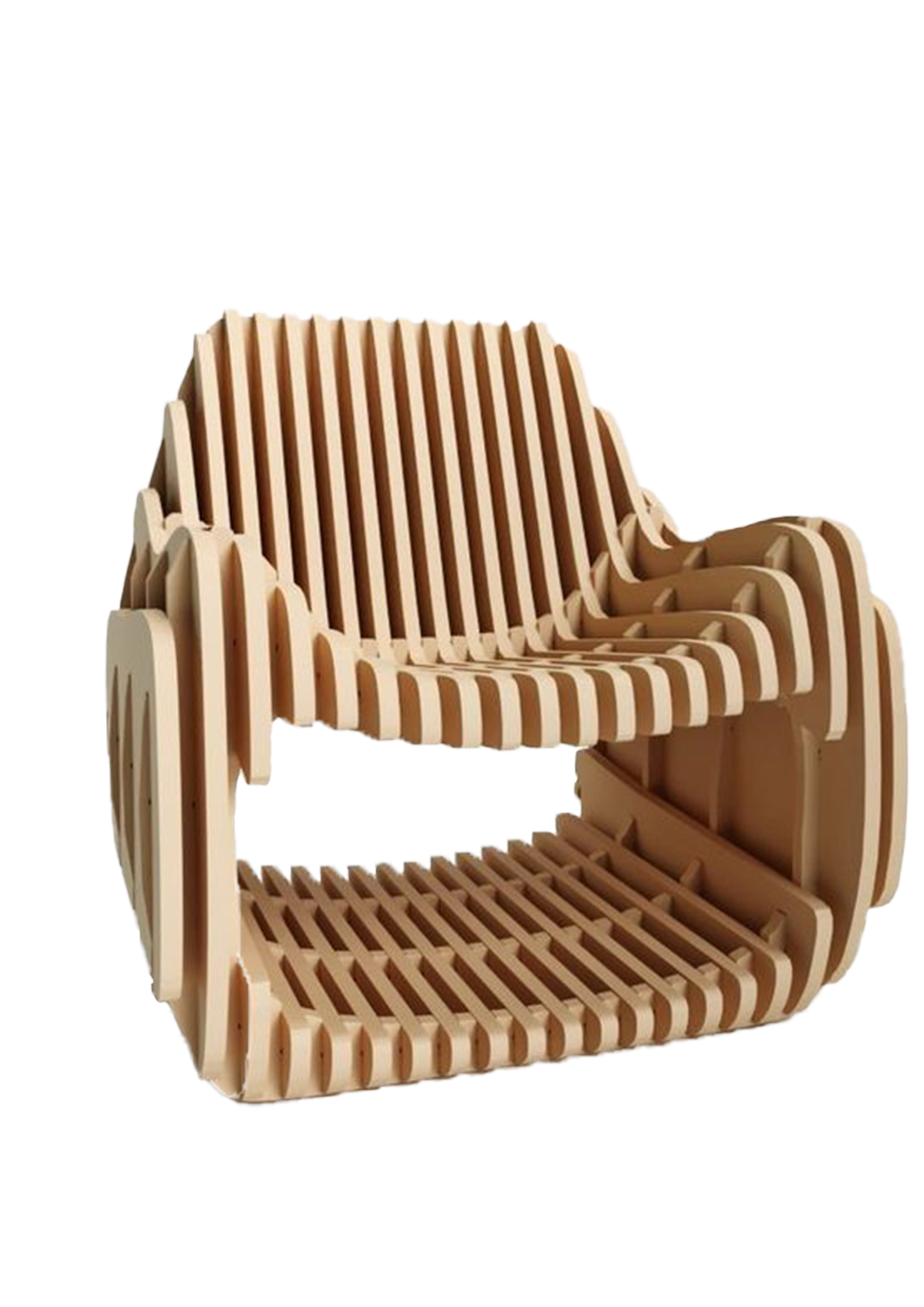
In an apartment with immaculate walls—sometimes white, sometimes eggshell—sat a sculptural chair, crafted from undulating wooden slats. This was no ordinary chair—it had emerged from the hands of an artisan who had imbued it with purpose. But in a world obsessed with utility, few understood its true nature.
The chair remembered the workshop where it was born. The craftsman had whispered to it as his hands shaped each curve: "You will be more than what they see." Those words became the chair's silent mantra through years of misunderstanding.
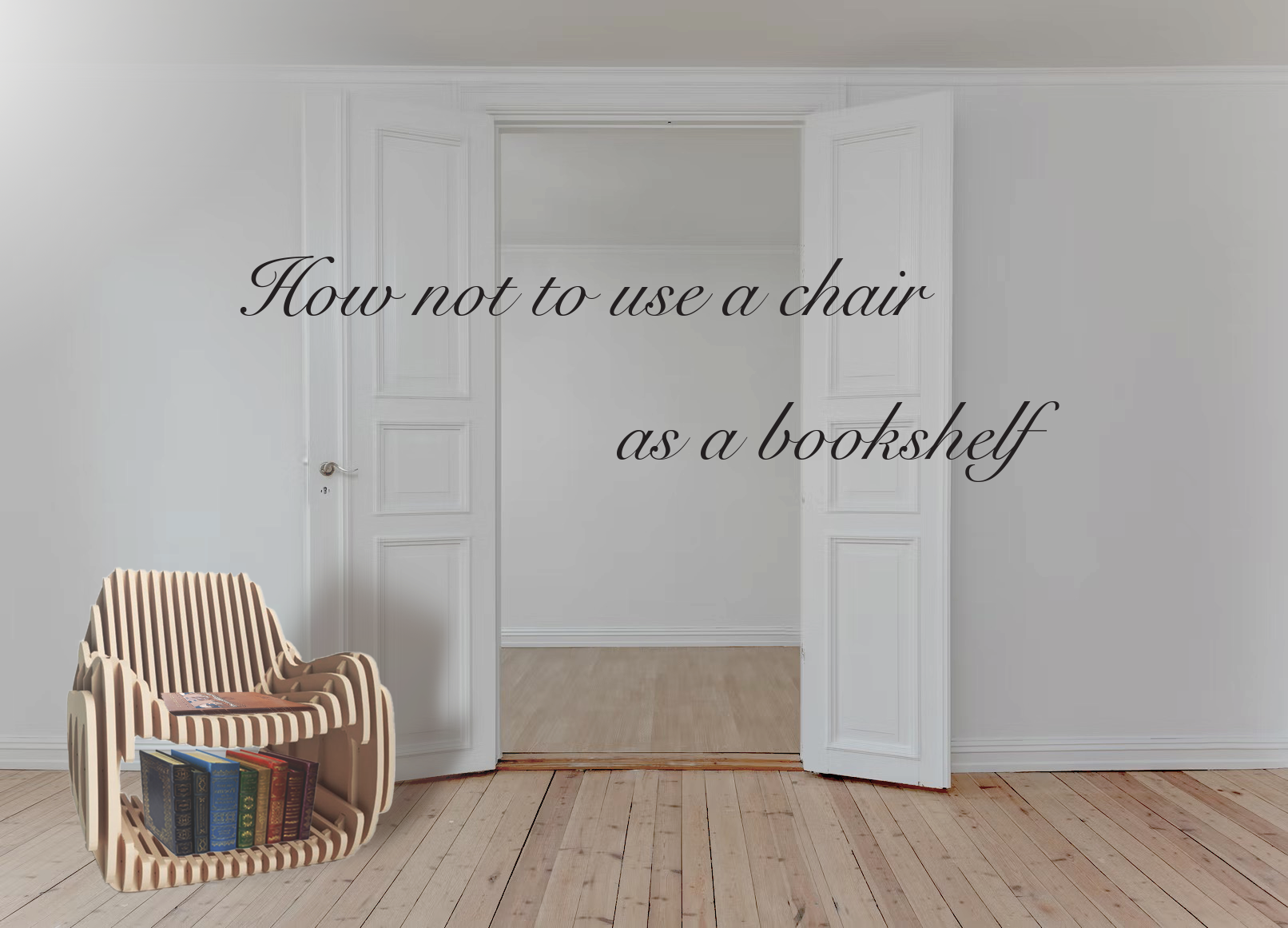
One day, a new owner decided the chair's graceful curves would serve perfectly as a bookshelf. "How clever!" visitors exclaimed as they admired leather-bound volumes nestled between wooden slats. The chair bore the weight dutifully, though each book pressed against its form like a small betrayal. It wasn't designed to be static, immobile, a mere vessel for others' stories. It had its own story to tell.
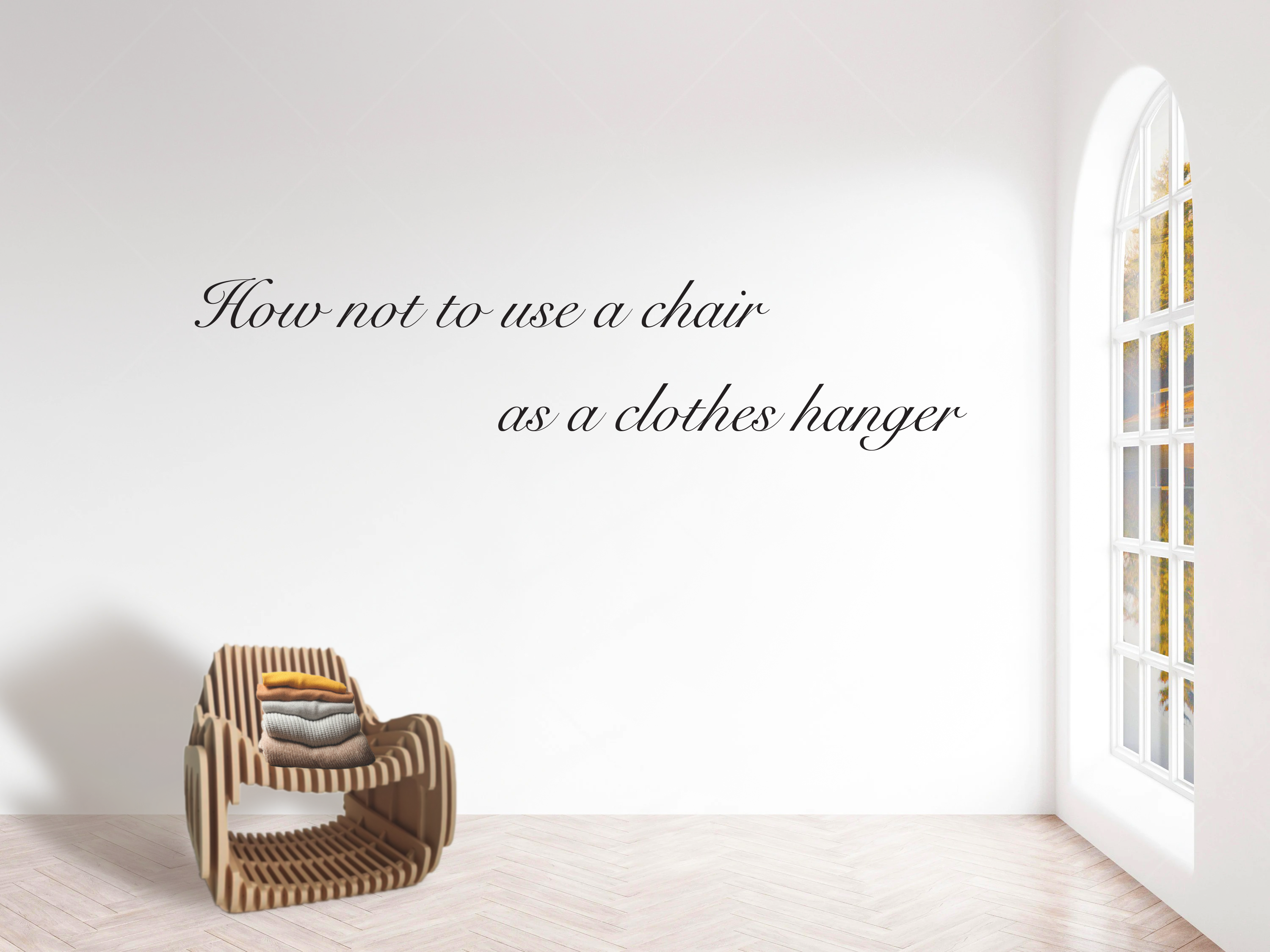
The books eventually disappeared, replaced by neatly folded sweaters and pressed shirts. "Such a stylish clothes hanger!" guests marveled. The chair felt itself fading into the background, becoming invisible beneath layers of fabric. It existed in a strange limbo—seen by all yet truly seen by none. The weight of misidentity settled heavier than any physical burden.
The chair began to wonder if there was something inherently flawed in its design. Perhaps if its curves were different, its purpose would be clearer. The existential doubt crept in like woodworm—quiet, persistent, destructive. Was a chair still a chair if nobody sat in it? What was the essence of chairness if not to provide rest?
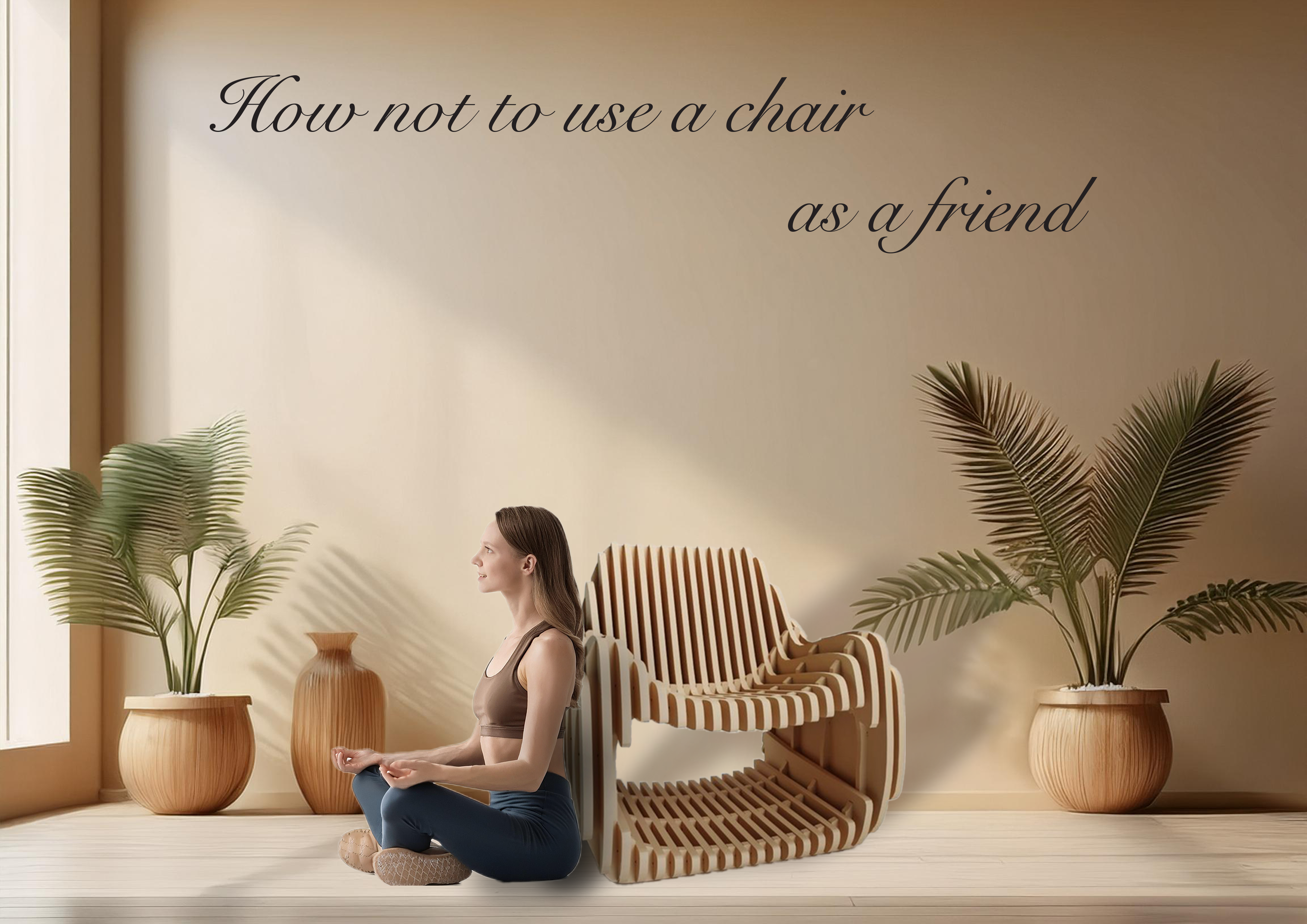
The chair relocated to the south of Italy. The sun, the warmth, the harmonious blend between its wooden color and its new environment seemed perfect. One peaceful afternoon, a young woman settled on the floor beside the chair. For the first time in its existence, someone chose to be near without imposing function. The woman closed her eyes, breathed deeply, and entered meditation. The chair observed her serene posture, her rhythmic breath. It sensed something familiar in her presence—another entity comfortable in stillness, seeking purpose beyond what was immediately visible.
In that shared silence, the chair felt understood. Not as furniture, not as an object to be used, but as a companion in contemplation. "Friend," the woman whispered as she left, gently touching one wooden slat. That single moment of recognition sparked something new within the chair's wooden heart.
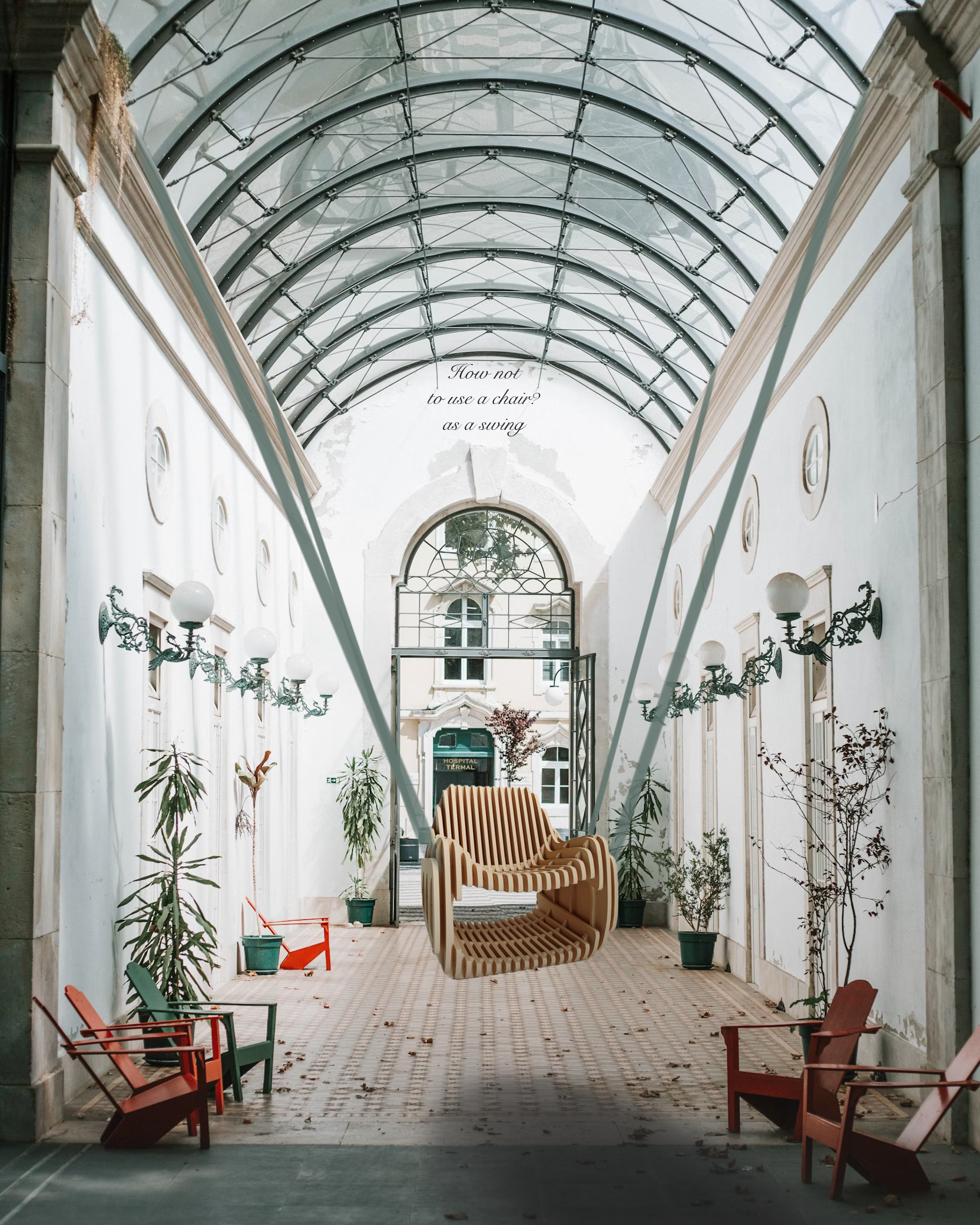
Later, it found itself transported to a grand corridor with glass arches and dappled sunlight. Someone had the whimsical idea to suspend it as a swing. Children approached it with curiosity but never stayed long—something about its form didn't invite the carefree swaying they sought. The chair swung gently in empty corridors, watching seasons change through the glass ceiling. Suspended between earth and sky, neither fully one thing nor another, it had never felt more like itself.
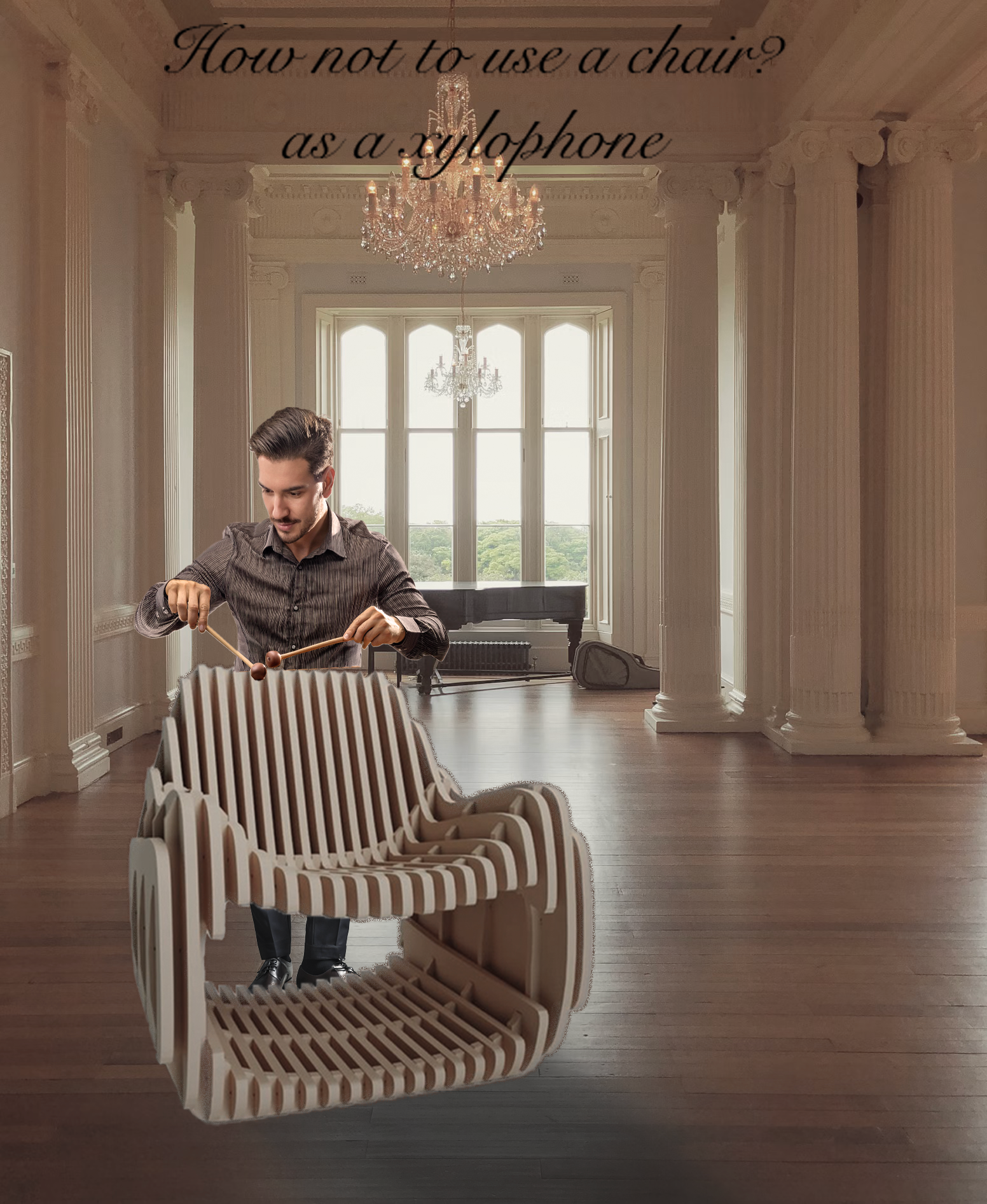
The seasons turned, and the chair traveled again. This time to a majestic hall with white columns and glittering chandeliers. A musician approached, drawn to its unusual form. With xylophone mallets in hand, he tapped experimentally on one wooden slat.
A clear, resonant note filled the room.
He tapped another slat. Then another. Each produced a different tone, creating an unexpected scale. The musician's eyes widened with delight as he began to play a simple melody across the chair's form.
For the first time, the chair vibrated with purpose. Each note resonated through its wooden fibers, awakening something profound and previously dormant. It wasn't just making sound—it was giving voice to all the patient waiting, all the silent watching, all the misunderstood existence. Each note carried years of unspoken thoughts.
The musician returned day after day, composing pieces specifically for the chair's unique tonal range. People gathered to listen to the chair that sang. Critics wrote about the innovative instrument disguised as furniture. Composers created works celebrating its distinctive voice.
The chair that had spent years questioning its purpose now understood the craftsman's whispered promise. It hadn't been designed wrongly—it had been designed for a revelation that could only come through the journey of being misunderstood.
In finding its voice, the chair discovered that its true purpose wasn't singular at all. It had been a bookshelf, a clothes hanger, a meditation companion, a swing, and now an instrument. Each role had been necessary—a step on the path to self-discovery.
People still occasionally sat on it, placed books on it, or draped clothes over it. But now, these acts felt like conversations rather than impositions. The chair had transcended definition. It was no longer an object defined by function but a presence defined by possibility.
And in this transcendence, it finally found peace.
Dans un appartement aux murs immaculés tantôt de blanc, tantôt couleurs coquille d'oeuf, se trouvait une chaise sculpturale, façonnée de lattes de bois ondulantes. Ce n'était pas une chaise ordinaire—elle avait émergé des mains d'un artisan qui lui avait insufflé un dessein. Mais dans un monde obsédé par l'utilité, peu comprenaient sa véritable nature.
La chaise se souvenait de l'atelier où elle était née. L'artisan lui avait murmuré tandis que ses mains façonnaient chaque courbe : "Tu seras plus que ce qu'ils voient." Ces mots étaient devenus le mantra silencieux de la chaise à travers des années d'incompréhension.
Un jour, un nouveau propriétaire décida que les courbes gracieuses de la chaise serviraient parfaitement de bibliothèque. "Quelle ingéniosité !" s'exclamaient les visiteurs en admirant les volumes reliés en cuir nichés entre les lattes de bois. La chaise supportait le poids docilement, bien que chaque livre pesât contre sa forme comme une petite trahison. Elle n'avait pas été conçue pour être statique, immobile, un simple réceptacle pour les histoires des autres. Elle avait sa propre histoire à raconter.
Les livres finirent par disparaître, remplacés par des pulls soigneusement pliés et des chemises repassées. "Quel porte-vêtements élégant !" s'émerveillaient les invités. La chaise se sentait s'estomper dans l'arrière-plan, devenant invisible sous les couches de tissu. Elle existait dans un étrange limbe—vue par tous mais véritablement vue par personne. Le poids de la mésidentité s'installait plus lourdement que n'importe quel fardeau physique.
La chaise commença à se demander s'il y avait quelque chose d'intrinsèquement défectueux dans sa conception. Peut-être que si ses courbes étaient différentes, son but serait plus clair. Le doute existentiel s'insinuait comme un ver dans le bois—silencieux, persistant, destructeur. Une chaise était-elle toujours une chaise si personne ne s'y asseyait ? Quelle était l'essence de la "chaisité" si ce n'était pas de procurer du repos ?
La chaise déménagea pour le sud de l'Italie. le soleil, la chaleur, l'harmonie des couleurs entre sa couleur de bois et son nouvel environemnet semblait parfait. Un après-midi paisible, une jeune femme s'installa sur le sol près de la chaise. Pour la première fois de son existence, quelqu'un choisissait d'être proche sans imposer de fonction. La femme ferma les yeux, respira profondément et entra en méditation. La chaise observa sa posture sereine, sa respiration rythmique. Elle ressentit quelque chose de familier dans sa présence—une autre entité à l'aise dans l'immobilité, cherchant un but au-delà de ce qui était immédiatement visible.
Dans ce silence partagé, la chaise se sentit comprise. Non pas comme un meuble, ni comme un objet à utiliser, mais comme une compagne de contemplation. "Amie," murmura la femme en partant, touchant doucement une latte de bois. Ce simple moment de reconnaissance éveilla quelque chose de nouveau dans le cœur de bois de la chaise.
Plus tard, elle se retrouva transportée dans un grand corridor aux arches de verre et à la lumière tachetée. Quelqu'un avait eu l'idée fantaisiste de la suspendre comme une balançoire. Les enfants s'en approchaient avec curiosité mais ne restaient jamais longtemps—quelque chose dans sa forme n'invitait pas au balancement insouciant qu'ils recherchaient. La chaise se balançait doucement dans les corridors vides, regardant les saisons changer à travers le plafond de verre. Suspendue entre ciel et terre, n'étant pleinement ni une chose ni une autre, elle ne s'était jamais sentie plus elle-même.
Les saisons tournèrent, et la chaise voyagea à nouveau. Cette fois vers une majestueuse salle aux colonnes blanches et aux lustres étincelants. Un musicien s'approcha, attiré par sa forme inhabituelle. Baguettes de xylophone en main, il tapota expérimentalement sur une latte de bois.
Une note claire et résonante emplit la pièce.
Il tapota une autre latte. Puis une autre. Chacune produisait un ton différent, créant une gamme inattendue. Les yeux du musicien s'élargirent de délice alors qu'il commençait à jouer une simple mélodie sur la forme de la chaise.
Pour la première fois, la chaise vibrait avec un but. Chaque note résonnait à travers ses fibres de bois, éveillant quelque chose de profond et jusqu'alors dormant. Ce n'était pas simplement produire du son—c'était donner voix à toute l'attente patiente, toute l'observation silencieuse, toute l'existence incomprise. Chaque note portait des années de pensées inexprimées.
Le musicien revint jour après jour, composant des morceaux spécifiquement pour la gamme tonale unique de la chaise. Les gens se rassemblaient pour écouter la chaise qui chantait. Les critiques écrivaient sur l'instrument innovant déguisé en meuble. Les compositeurs créaient des œuvres célébrant sa voix distinctive.
La chaise qui avait passé des années à questionner son but comprenait maintenant la promesse murmurée de l'artisan. Elle n'avait pas été mal conçue—elle avait été conçue pour une révélation qui ne pouvait venir qu'à travers le voyage de l'incompréhension.
En trouvant sa voix, la chaise découvrit que son véritable but n'était pas du tout singulier. Elle avait été une bibliothèque, un porte-vêtements, une compagne de méditation, une balançoire, et maintenant un instrument. Chaque rôle avait été nécessaire—une étape sur le chemin de la découverte de soi.
Les gens s'asseyaient encore occasionnellement dessus, y posaient des livres ou y drapaient des vêtements. Mais maintenant, ces actes ressemblaient à des conversations plutôt qu'à des impositions. La chaise avait transcendé la définition. Elle n'était plus un objet défini par sa fonction mais une présence définie par la possibilité.
Et dans cette transcendance, elle trouva enfin la paix.